

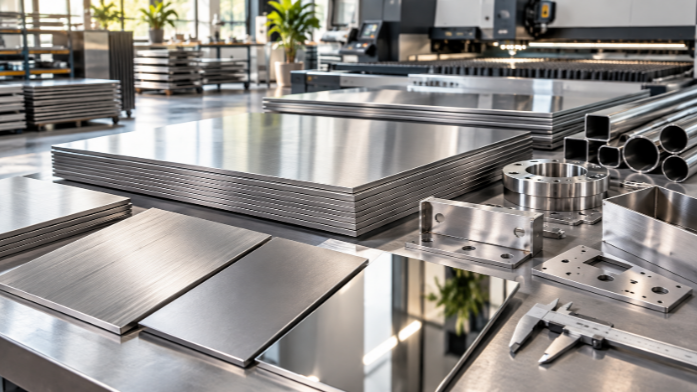
Stainless steel sheets are widely used in construction, manufacturing, architecture, and metal fabrication. Their strength, corrosion resistance, and attractive appearance make them a practical choice for residential, commercial, and industrial projects.
Whether you are manufacturing equipment, creating decorative panels, or completing a fabrication project, selecting the right stainless steel material helps ensure durability and long-term performance.
Choosing a suitable steel sheet stainless product involves understanding material grades, thicknesses, finishes, and application requirements.
This guide explores the benefits, common uses, and important considerations when purchasing stainless steel sheets.
What Is a Stainless Steel Sheet?
A stainless steel sheet is a flat metal product manufactured from a steel alloy containing chromium. Chromium forms a protective surface layer that helps resist corrosion and staining.
Unlike ordinary carbon steel, stainless steel generally does not require painting or protective coatings in many applications.
Stainless steel sheets are available in various thicknesses, grades, and surface finishes, making them suitable for functional and decorative purposes.
An SS steel sheet can be cut, formed, welded, and fabricated into different components using appropriate equipment and techniques.
Different Grades of Stainless Steel Sheets

Understanding stainless steel grades is essential because each grade provides different performance characteristics.
Grade 304 Stainless Steel Sheet
Grade 304 is among the most commonly used stainless steel grades for general fabrication.
It offers good corrosion resistance, durability, and workability.
Common applications include:
- Commercial kitchen equipment
- Architectural panels
- Interior decorative features
- Equipment covers
- General metal fabrication
Grade 304 is often a practical option for indoor installations and environments without significant chloride exposure.
Grade 316 Stainless Steel Sheet
Grade 316 contains molybdenum, which improves resistance to certain types of corrosion, especially in chloride-containing environments.
It is commonly selected for coastal applications, marine-related fabrication, and demanding industrial environments.
Although Grade 316 provides improved corrosion resistance, proper cleaning and maintenance remain important.
Choosing between Grade 304 and Grade 316 depends on environmental exposure, intended use, and project specifications.
Key Benefits of Stainless Steel Sheets
1. Excellent Corrosion Resistance
One of the greatest advantages of stainless steel is its resistance to corrosion.
The chromium-rich protective layer helps prevent surface deterioration under suitable environmental conditions.
This makes stainless steel sheets useful for applications exposed to moisture, cleaning processes, and outdoor conditions.
However, selecting the correct grade is essential for achieving suitable corrosion resistance.
2. Long-Term Durability
Stainless steel offers strength and resistance to everyday wear.
When properly selected and installed, stainless steel sheets can maintain their functionality and appearance over extended periods.
Their durability makes them suitable for frequently used surfaces, equipment panels, and fabricated components.
3. Low Maintenance Requirements
Stainless steel surfaces are relatively easy to clean and maintain.
Routine cleaning removes dirt, fingerprints, and environmental contaminants while helping preserve the protective surface.
Unlike some untreated metals, stainless steel generally does not require regular painting.
4. Modern Appearance
Stainless steel offers a clean, professional appearance suitable for contemporary architectural designs.
Different finishes allow customers to achieve brushed, polished, or reflective surfaces.
This aesthetic flexibility makes stainless steel popular for decorative panels, commercial interiors, and architectural features.
Common Applications of Stainless Steel Sheets
Commercial Kitchens and Food Preparation Areas
Stainless steel sheets are widely used in commercial kitchens because their smooth surfaces are easy to clean.
They are commonly incorporated into preparation benches, splashbacks, equipment covers, and food-processing installations.
The appropriate grade and finish should be selected according to hygiene and operational requirements.
Architectural and Decorative Projects
Architects and fabricators frequently use stainless steel for decorative wall panels, building features, and interior finishes.
Mirror-polished and brushed finishes can complement modern building designs.
Stainless steel also provides durability alongside its attractive appearance.
Industrial Fabrication
Stainless steel sheets are used to manufacture machinery covers, protective panels, cabinets, and specialised equipment components.
Their suitability depends on factors including operating conditions, material thickness, and fabrication requirements.
Residential Improvements
Homeowners may use stainless steel sheets for kitchen splashbacks, decorative surfaces, workshop benches, and custom installations.
Their combination of durability and appearance makes them useful for projects requiring practical and attractive finishes.
Understanding Stainless Steel Sheet Thickness
Thickness is an important consideration when selecting stainless steel sheets.
Different applications require different levels of rigidity, weight, and fabrication flexibility.
Thinner sheets are commonly used for decorative panels, lightweight covers, and applications requiring bending or forming.
Thicker sheets provide greater rigidity and may be suitable for more demanding fabrication projects.
For example, a stainless steel sheet 3mm thick can be used for equipment panels, fabricated components, and work surfaces where additional rigidity is required.
However, thickness alone does not determine load-bearing capacity. Material grade, dimensions, supports, and engineering requirements must also be considered.
Steelmart offers stainless steel sheets in several thickness options, including 0.9mm, 1mm, 1.2mm, 1.6mm, 2mm, and 3mm.
Different Stainless Steel Sheet Finishes
Surface finish influences both appearance and practical performance.
Brushed Finish (#4): Provides a satin appearance commonly selected for architectural panels, commercial installations, and decorative fabrication.
Mirror Finish (#8): Offers a highly reflective surface suitable for decorative features and projects requiring a polished appearance.
2B Finish: Provides a smooth mill finish commonly used for general fabrication and industrial applications.
Selecting the correct finish depends on the desired appearance, cleaning requirements, and intended application.
Combining Stainless Steel Sheets with Structural Materials

Many fabrication projects require additional structural components to support sheet metal installations.
For example, rhs steel can be used to create frames, supports, and fabricated assemblies.
RHS stands for Rectangular Hollow Section, a commonly used steel profile for structural and general fabrication purposes.
Combining stainless steel sheets with appropriate rectangular or square steel tubing allows fabricators to create equipment frames, cabinets, workbenches, and custom structures.
Where different metals are combined, environmental exposure and potential galvanic corrosion should be considered.
How to Choose the Right Stainless Steel Sheet
Before purchasing stainless steel sheets, evaluate several important factors.
Material Grade: Select Grade 304 or Grade 316 according to environmental conditions and application requirements.
Thickness: Determine the required rigidity, weight, and fabrication characteristics.
Sheet Dimensions: Measure the required length and width to reduce unnecessary cutting and material waste.
Surface Finish: Choose brushed, mirror, or 2B finishes according to appearance and practical requirements.
Fabrication Process: Confirm that the material is compatible with the intended welding, bending, cutting, or forming techniques.
Budget: Consider both initial purchasing costs and expected long-term maintenance requirements.
Careful planning helps ensure that the selected material matches your project requirements.
Buy Stainless Steel Sheets from Steelmart
Finding suitable stainless steel materials is an important part of successful fabrication.
Steelmart provides stainless steel sheets in Grade 304 and Grade 316, with multiple finishes, sizes, and thickness options.
Customers can explore different specifications for architectural, commercial, residential, and industrial applications.
Steelmart also supplies a range of complementary steel products for projects requiring additional fabrication materials.
Reviewing product specifications before ordering helps ensure the selected material meets your intended requirements.
Conclusion
Stainless steel sheets are versatile materials valued for their strength, corrosion resistance, durability, and attractive appearance.
Understanding material grades, thicknesses, finishes, and applications makes it easier to choose suitable products.
Whether you need stainless steel for kitchen installations, decorative panels, or industrial fabrication, selecting the correct specifications is essential.
Explore Steelmart’s stainless steel sheet range to find quality materials for your next construction or fabrication project.
Read More: Stainless Steel Pipe and Other Essential Steel Products






Leave a Reply