

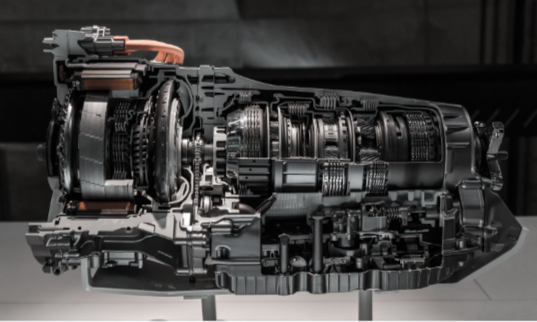
Subaru stands apart from virtually every other mainstream automaker with its near-universal commitment to symmetrical all-wheel drive. While competitors offer AWD as an optional upgrade on select models, Subaru has built its entire identity around the concept that all four wheels should share the work of putting power to the pavement. This philosophical commitment has created a loyal ownership base that spans outdoor adventurers, cold-climate commuters, and driving enthusiasts alike. At the center of this system sits the transmission — a component that in a Subaru does far more than simply change gear ratios. It manages the distribution of power between axles, adapts to changing traction conditions, and fundamentally defines the driving character of every vehicle in the lineup.
How Subaru’s Symmetrical AWD System Works
Unlike many competitors that use front-wheel-drive-based AWD systems with a rear-mounted power transfer unit, Subaru’s symmetrical layout places the transmission along the vehicle’s centerline with equal-length driveshafts extending to each side. This balanced configuration distributes weight more evenly and reduces the torque steer effects that plague asymmetric designs.
The heart of this system is the center differential housed within the transmission case itself. Different Subaru models use different center differential designs depending on their intended purpose. The WRX STI’s driver-controlled center differential (DCCD) allows manual adjustment of front-to-rear torque bias for maximum performance flexibility. The standard WRX and most other models use an electronically controlled active torque split that continuously adjusts power distribution based on wheel speed sensors and throttle input. Legacy and Outback models equipped with CVTs use a different approach entirely, employing an electronically managed coupling that provides seamless torque transfer without the mechanical complexity of a traditional differential.
Understanding which system your Subaru uses is important because it affects both driving behavior and the type of transmission service required to maintain proper operation. The DCCD system, for instance, uses different fluid specifications than the simpler viscous coupling systems found in earlier models, and using incorrect fluid can damage the center differential’s clutch packs.
Manual Transmissions: The Enthusiast’s Choice
Subaru’s manual transmissions have earned a dedicated following among driving enthusiasts who appreciate the direct engagement these gearboxes provide. The five-speed manual found in earlier Impreza, Legacy, and Forester models was a straightforward design that paired well with the boxer engine’s torque characteristics. Its relatively wide gear spacing made it forgiving for everyday driving while still providing adequate performance for spirited backroad excursions.
The six-speed manual introduced in the WRX and STI models brought closer ratios that kept the turbocharged boxer engine in its optimal powerband during aggressive driving. This transmission also featured a more robust construction to handle the increased torque output of the turbocharged applications. The shift feel of a well-maintained Subaru six-speed ranks among the best in the sport compact segment, with a mechanical precision that rewards smooth, deliberate inputs.
One known limitation of certain Subaru manual transmissions is the strength of the synchronizers in second and third gear under hard use. Performance-oriented driving, particularly in turbocharged applications with increased torque, can accelerate synchronizer wear and lead to difficult shifting or grinding when engaging these gears. Regular fluid changes using the correct Subaru-specified gear oil help extend synchronizer life, but this is a known weak point that aggressive drivers should monitor.
Automatic and CVT Transmissions in the Subaru Lineup
Subaru’s relationship with automatic transmissions has evolved significantly over the years. The traditional four-speed automatic found in older Legacy, Outback, and Forester models was a conventional torque converter unit that prioritized reliability and smooth operation. These transmissions were generally long-lived when maintained properly, though they lacked the refinement and efficiency of more modern designs.
The introduction of the Lineartronic CVT across most of the Subaru lineup marked a major shift in the company’s transmission strategy. CVTs use a belt and variable-diameter pulley system instead of fixed gear ratios, allowing the engine to operate at its most efficient speed regardless of vehicle velocity. For Subaru, the CVT also simplified the integration of all-wheel drive by using an electronically controlled coupling in place of a mechanical center differential.
Subaru’s CVT implementation has proven more reliable than many competing designs, partly because the company took a conservative approach to the technology and partly because the boxer engine’s smooth power delivery is well-suited to CVT operation. However, CVTs are not maintenance-free. The transmission fluid requires periodic replacement — typically every 60,000 miles under normal conditions and more frequently under severe service conditions like towing, mountain driving, or sustained high-temperature operation.
Common Subaru Transmission Issues by Model
Certain Subaru transmission applications have developed known reliability patterns that owners should be aware of. The five-speed automatic in the 2005-2009 Outback and Legacy experienced torque converter shudder issues that manifested as a vibration during light acceleration. This condition was related to degraded friction material in the lockup clutch and could often be addressed through a fluid change with the correct Subaru ATF, though advanced cases sometimes required torque converter replacement.
The early Lineartronic CVTs installed in 2010-2013 models experienced some reliability concerns during their initial production years. Subaru extended warranty coverage on these units and made design revisions that improved durability in subsequent model years. Owners of early CVT-equipped models should ensure they’re using the correct CVT fluid and adhering to the recommended service intervals.
For manual transmission equipped WRX and STI models, throwout bearing failures represent a recurring maintenance item. The throwout bearing experiences constant loading during clutch engagement and is a wear item that typically requires replacement along with the clutch assembly when the clutch reaches the end of its service life.
The JDM Market for Subaru Transmissions
When a Subaru transmission requires replacement, the JDM import market offers distinct advantages over domestic rebuilding. Japanese-market Subarus often featured different transmission specifications, gear ratios, and even additional models not available in North America. This expanded variety means that buyers can sometimes find units with specifications better suited to their needs than the original equipment.
For owners searching for Subaru JDM transmissions, specialized importers offer units covering the full range of Subaru applications — from the five-speed manual in the naturally aspirated Impreza to the six-speed manual in the turbocharged WRX STI and the various automatic and CVT options found across the Legacy, Outback, and Forester lineups. Low-mileage Japanese units typically arrive with 40,000 to 70,000 kilometers and have been maintained under Japan’s demanding vehicle care standards.
When sourcing a JDM Subaru transmission, pay close attention to the center differential type and gear ratios. Japanese-market specifications sometimes differ from North American versions, and confirming these details before purchase ensures proper integration with your vehicle’s existing drivetrain components and engine management system.
Extending Transmission Life in Any Subaru
Regardless of which transmission type your Subaru uses, several universal practices help maximize service life. Use the exact fluid specification recommended by Subaru — generic substitutes lack the specific friction modifiers these transmissions require. Change fluids at or before recommended intervals, and consider shorter intervals for severe service conditions. Avoid aggressive launches from standstill, which stress the center differential and driveline components. And address unusual noises, vibrations, or shifting irregularities promptly before minor issues become major failures.







Leave a Reply